A customer recently sent us this photo and a number that made us stop and double-check: 6,000 meters drilled. One shank adapter. Tunnel project. That is not a typo. KAIQIU COP1838 T38 Shank Adapter after 6,000 meters For anyone who runs underground d...
Contact Us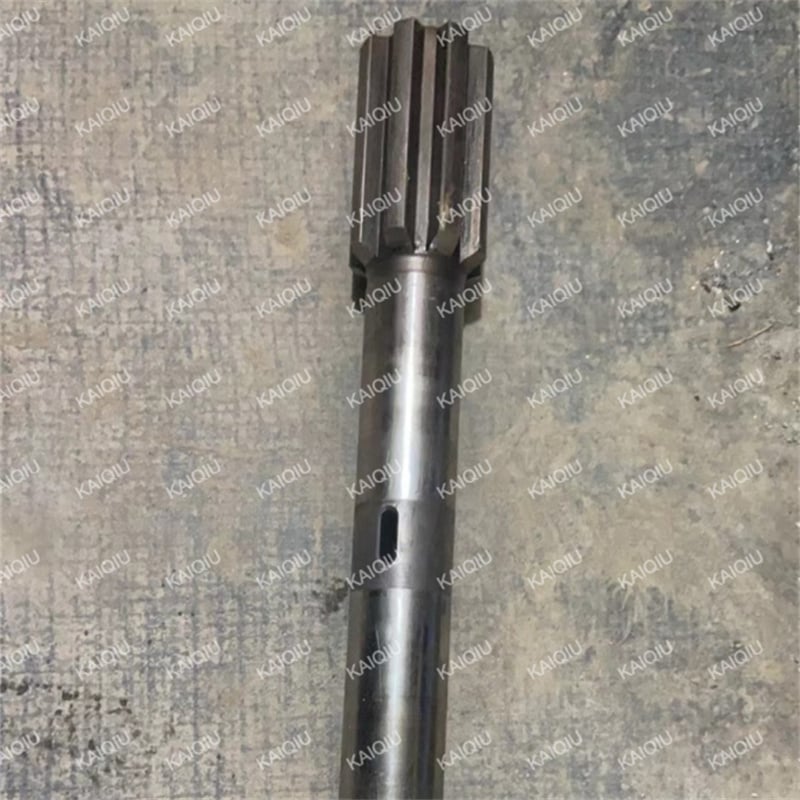
A customer recently sent us this photo and a number that made us stop and double-check: 6,000 meters drilled. One shank adapter. Tunnel project. That is not a typo.
KAIQIU COP1838 T38 Shank Adapter after 6,000 meters
For anyone who runs underground drilling, 6,000 drill meters on a single shank adapter is well above what most sites budget for. Shanks take a beating — every blow from the piston, every rotation under torque, every shift. They are usually the first component in the string to give out. So when one lasts this long, it is worth talking about.
The Setup
Drifter: COP1838 hydraulic rock drill
Shank: KAIQIU T38 435 mm
Application: Tunnel face drilling
Total meters drilled: 6,000 m
The contractor was running a standard tunnel drilling setup — nothing exotic about the rig, the rock, or the parameters. Just steady production work, shift after shift.
What 6,000 Meters Looks Like
Take a look at the photo. This is the shank after the full 6,000 meters:
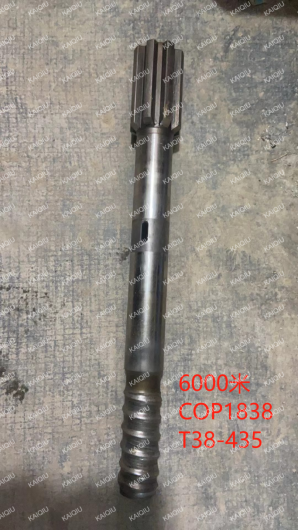
Splines are worn but intact. You can see the wear marks along the drive splines, but no stripping, no cracking. The profile is still engaged — it was still transmitting rotation properly when they pulled it.
Striking face shows impact but no mushrooming. The piston end has taken millions of blows and it shows, but the face held its shape. No chipping around the edges, no deformation.
Thread end is clean. The T38 thread that connects to the rod held up without cracking at the thread root — where fatigue failures usually start.
No fatigue cracks on the body. For a shank with this much service, that says a lot about the steel and the heat treatment.
The shank reached the end of its service life, but it did not fail. It just wore out — the way a good tool should.
What Makes the Difference
Shank life comes down to a handful of things, and none of them are secrets:
Steel grade and heat treatment. If the core is too hard, the shank cracks under impact. Too soft, and the striking face mushrooms after a few hundred meters. The trick is getting the surface hard enough to resist wear while keeping the core tough enough to absorb shock. That balance is where most shanks fall short.
Spline machining. The drive splines need to mate cleanly with the rotation chuck. Any slop introduces impact loading on the spline faces, and that is what strips them. Tight tolerances here pay off in meters.
Striking face geometry. The piston hits the shank face thousands of times per minute. If the face profile and surface finish are not right, micro-cracks start early and spread fast.
We do not claim to have reinvented the shank adapter. We just pay attention to those details and run tight quality control on every batch.
What the Site Said
The project manager told us: "We normally swap shanks around 3,000 to 4,000 meters. When this one pushed past 5,000 and still looked fine, we just let it run. At 6,000 it was time to change — but that is nearly double what we usually get. We have ordered more."
Interested?
We stock COP1838 shanks in T38 and T45, along with shanks for COP1238, COP2160, HD609, RD520, and other common drifters. If you are burning through shanks too fast or just want to see if ours last longer, reach out.
Taizhou Kaiqiu Drilling Tools Co., Ltd.

 EN
EN