Two customers, two different mines, two completely different rock types. One sent us a photo from a copper mine in South America. The other came from an iron mine in Australia. Both were running our high-pressure DTH bits. Here is what they looked li...
Contact Us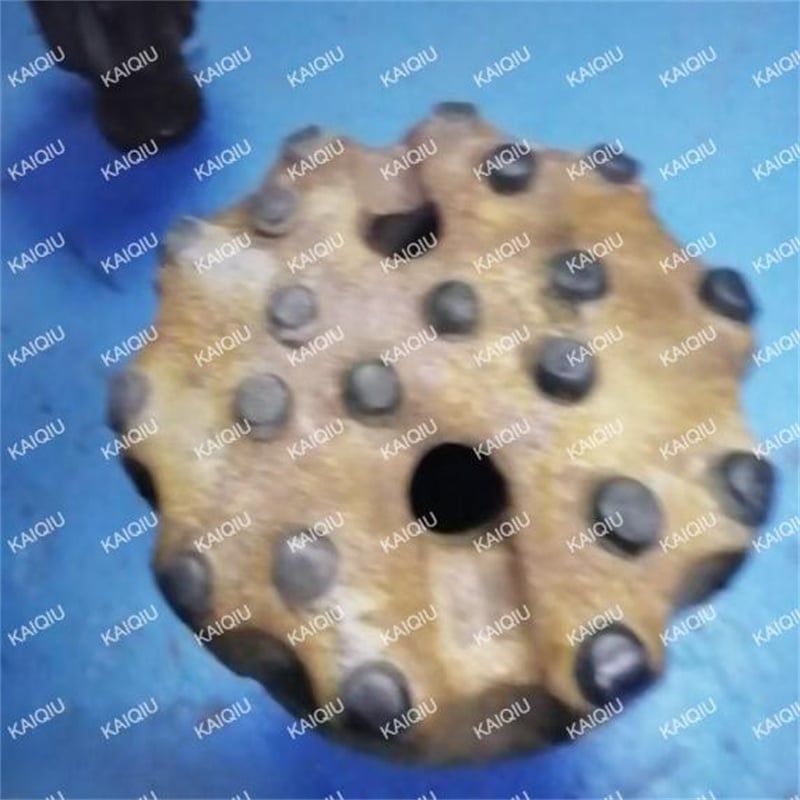
Two customers, two different mines, two completely different rock types. One sent us a photo from a copper mine in South America. The other came from an iron mine in Australia. Both were running our high-pressure DTH bits. Here is what they looked like when they came out of the hole.
Copper Mine — 700 Meters
KAIQIU high-pressure DTH bit after 700 meters in copper mine
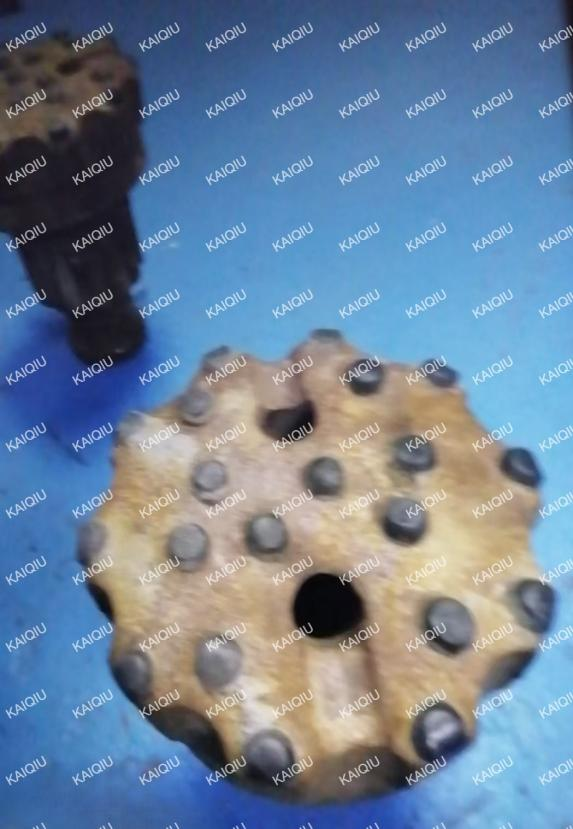
This bit drilled 700 meters in a copper ore body before the site pulled it. 700 meters on one high-pressure DTH bit is solid performance — a lot of sites budget closer to 400 or 500 before swapping.
Copper mines tend to produce abrasive, fragmented rock. The ore body is rarely uniform — you hit veins of hard material mixed with softer zones, and the bit has to handle both without losing penetration rate or eating itself up.
Look at the photo. The buttons are worn but still seated. The face shows even wear across all the gauge and face buttons. No chipping on the gauge row — which is where most DTH bits fail first, because the outer buttons take the hardest beating from cutting the hole diameter. The flushing grooves are still open, so hole cleaning stayed effective right to the end of the run.
700 meters, and the bit was still drilling when they pulled it for scheduled rotation.
Iron Mine — Worn to the Limit
KAIQIU high-pressure DTH bit from iron mine — carbide worn to extreme
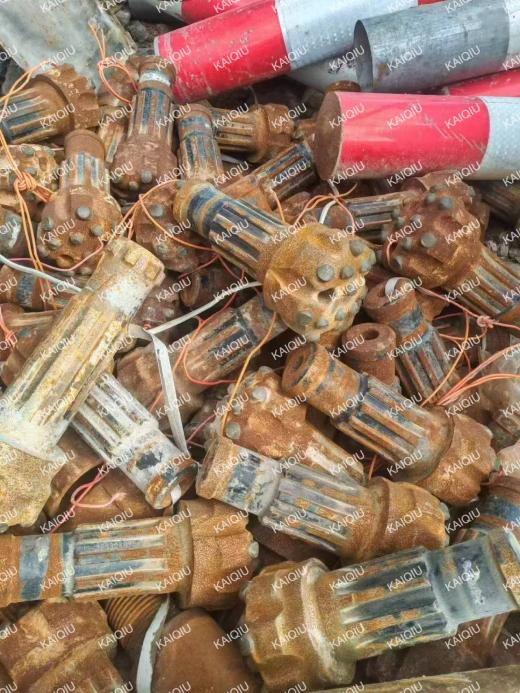
Iron ore is a different animal. It is dense and heavy on abrasion. Bits do not last as long in iron as they do in copper, period. The rock grinds everything down.
This bit came out of an iron mine and the photo tells you everything you need to know: the carbide buttons are worn down nearly flush with the body. That is what "worn to the limit" looks like. The buttons have been ground down millimeter by millimeter over hundreds of meters of drilling through iron ore.
But notice what did not happen:
The body is still intact. No cracks, no deep washout, no structural failure. In iron ore, body wash is a real problem because the cuttings are heavy and abrasive — they scour the steel as they flush out. This body held its shape all the way.
No buttons popped out. Even with the carbide worn down to stubs, every single button stayed seated in its hole. That means the brazing held. A popped button at 300 meters turns a good bit into scrap. These buttons stayed in until they had nothing left to give.
The wear was gradual and predictable. The site knew the bit was reaching end of life — they did not get surprised by a sudden failure. That means they could plan the change instead of reacting to a breakdown.
This is the right way for a bit to die. Not a sudden failure that leaves half the bit in the hole. Just a steady, predictable wear curve until the carbide is gone.
Why These Two Photos Matter Together
One bit from copper, one from iron. One pulled on schedule after a long run, one run to the absolute limit. Different rocks, different wear patterns, but the same result: the bits held together.
That consistency across different rock types is what mining contractors actually need. A bit that works great in limestone but falls apart in granite is not much use to a mine that drills both. These two photos show that the same carbide grade and body design can handle very different conditions without failing prematurely.
What the Mines Said
Copper mine: "We have been through a few suppliers on this project. These are giving us the most consistent meterage. We know what to expect out of each bit now, and that makes planning easier."
Iron mine: "The body on these bits holds up. With our last supplier we would see body cracks around 60% of the way through. These wear out instead of breaking — that is what we need."
High-Pressure DTH Bits We Stock
DHD3.5, DHD340, DHD350, DHD360,DHD380,QL40, QL50, QL60, QL80, Mission40, Mission50, Mission60, Mission80 and other common shank types. Face designs matched to rock hardness. Matching hammers and drill pipes also available.
Taizhou Kaiqiu Drilling Tools Co., Ltd.
 EN
EN