A customer running CIR hammers on a mining project sent us these photos. Low-pressure DTH drilling, mixed ground conditions, production work. The bits had finished their service run and were due for replacement — so they snapped a few pictures ...
Contact Us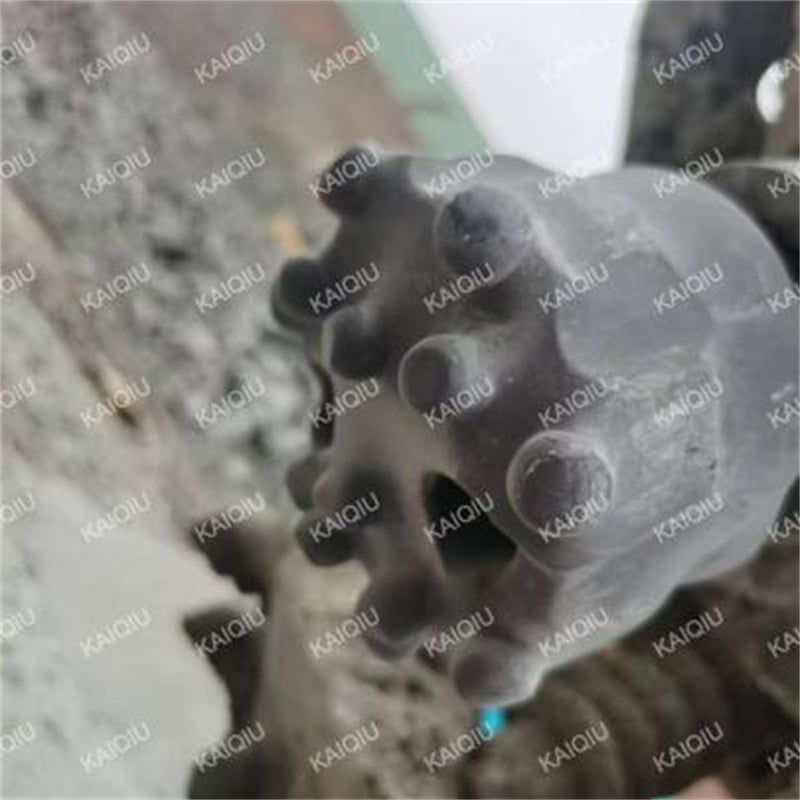
A customer running CIR hammers on a mining project sent us these photos. Low-pressure DTH drilling, mixed ground conditions, production work. The bits had finished their service run and were due for replacement — so they snapped a few pictures before swapping them out.
KAIQIU CIR DTH bit after mining service - face view
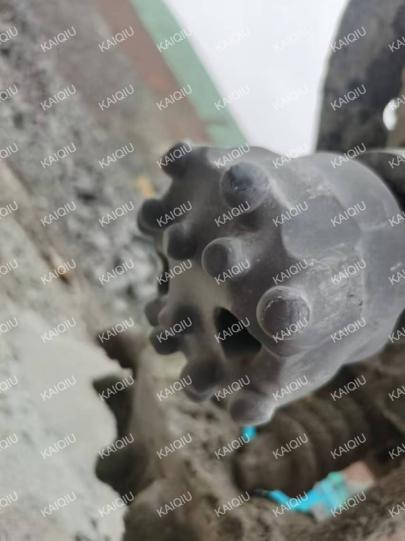
KAIQIU CIR DTH bits side by side
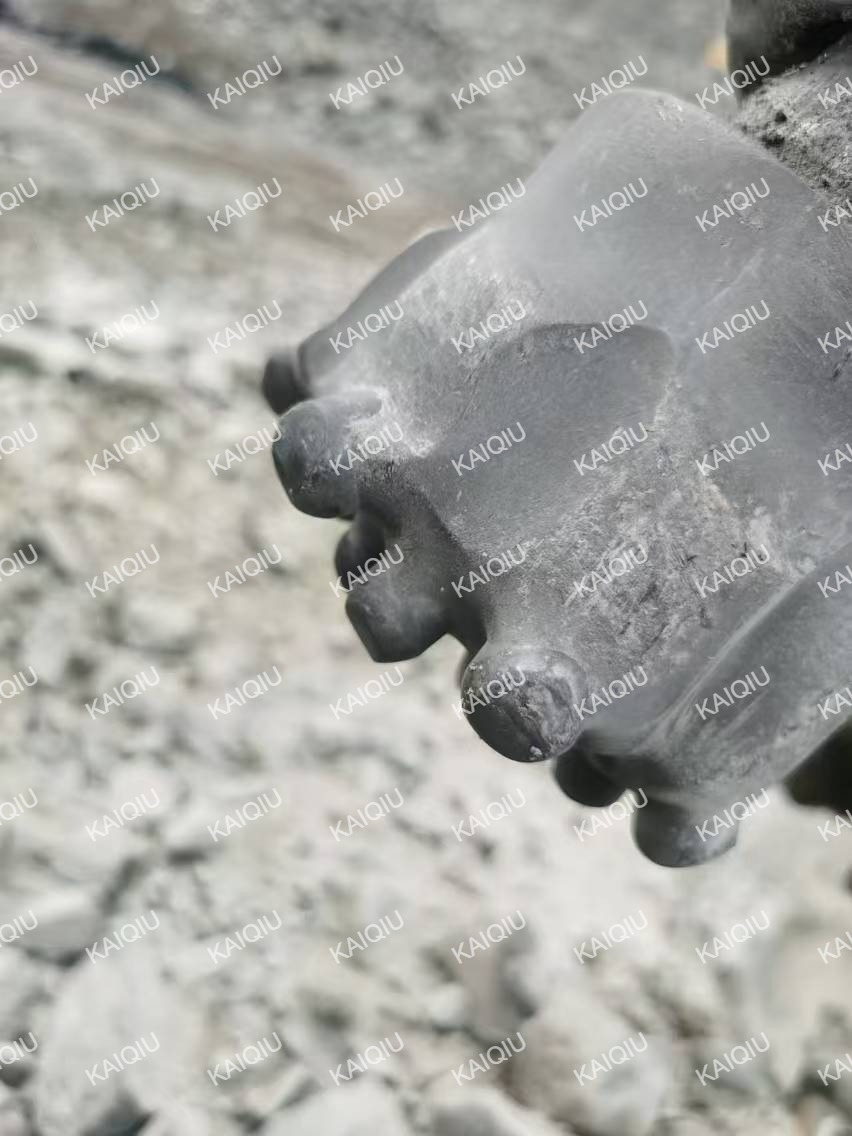
KAIQIU CIR DTH bit - spline end
CIR bits have been around for decades. They are simple, reliable, and they run on the kind of low-pressure air most job sites already have — 0.5 to 1.0 MPa, nothing fancy. That is why they are still everywhere: water wells, mining, quarrying, construction. The design has not changed much over the years, but the difference between a good CIR bit and a mediocre one is still in the details.
What the Photos Show
Three shots, three angles on the same story — bits that did their job and wore out the right way.
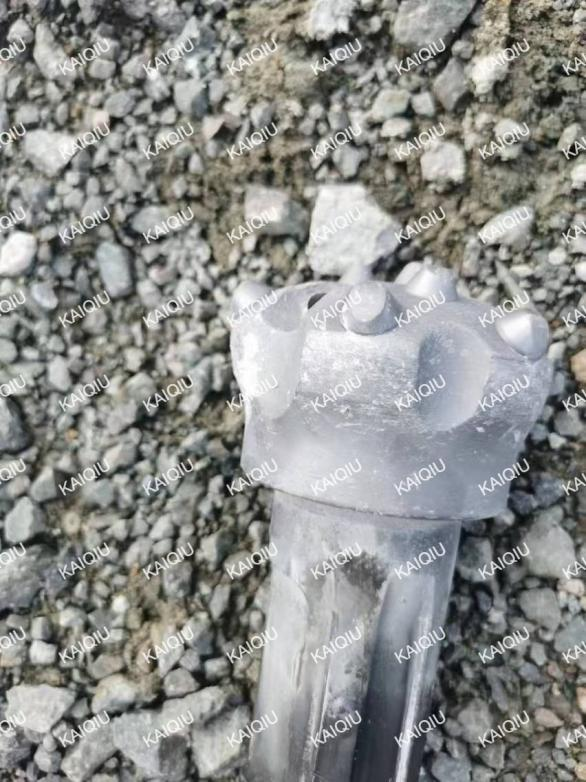
Face view (first photo). The carbide buttons are all there. No popped inserts, no chipped edges. On a low-pressure DTH bit, losing a button is usually a brazing problem — the heat from the air just is not enough to cause thermal cracking on its own. All the wear is on the working surfaces where it should be.
Side-by-side comparison (second photo). Two bits from the same batch, same rock, similar meterage. The wear is consistent between them. That matters in production drilling because if one bit lasts 200 meters and the next one lasts 80, your drilling schedule falls apart. Consistency from bit to bit means the customer knows what to expect.
Spline end (third photo). The drive splines that engage with the hammer are worn but intact — no cracking at the spline roots, no deformation that would jam the bit in the hammer. The air passages are clean. The bit was still rotating freely when they pulled it.
CIR Bits — What Actually Matters
The CIR category is crowded. Every supplier has them. But three things separate a bit that drills and a bit that drills well:
Carbide grade and seating. Because CIR bits run on low air pressure, flushing velocity is lower than on high-pressure hammers. Cuttings spend more time around the bit face, which means more abrasion on the buttons and the body. A harder carbide grade helps, but only if the braze joint is strong enough to keep the button in place. Too hard and the button chips under impact — too soft and it wears fast. Getting that balance right for low-pressure applications is the hard part.
Body wear resistance. The bit body takes a beating from two directions — impact from the piston and abrasion from the cuttings swirling around it. If the steel is too soft, the body washes out and the buttons lose support. If it is too hard, it cracks. The bits in these photos show body wear but no washout — the steel grade and heat treatment were on point.
Customer Comment
The driller told us: "We run CIR hammers because our compressor can't push high-pressure. Some suppliers' bits lose buttons after a couple of shifts. These lasted a full rotation. We are ordering another batch."
CIR Bits We Supply
CIR50,CIR65, CIR70, CIR90, CIR110, CIR130, CIR150, CIR170, CIR200 — with concave, convex, and flat face options depending on the rock. Also in stock: matching CIR hammers, drill pipes, and bits for high-pressure DHD,Mission and QL series hammers.
Taizhou Kaiqiu Drilling Tools Co., Ltd.

 EN
EN