We asked a few mining customers to send us photos of their used shanks before they swap them out. Not the clean ones off the shelf — the ones that have been absorbing piston blows for thousands of meters underground. Here is what they sent. KA...
Contact Us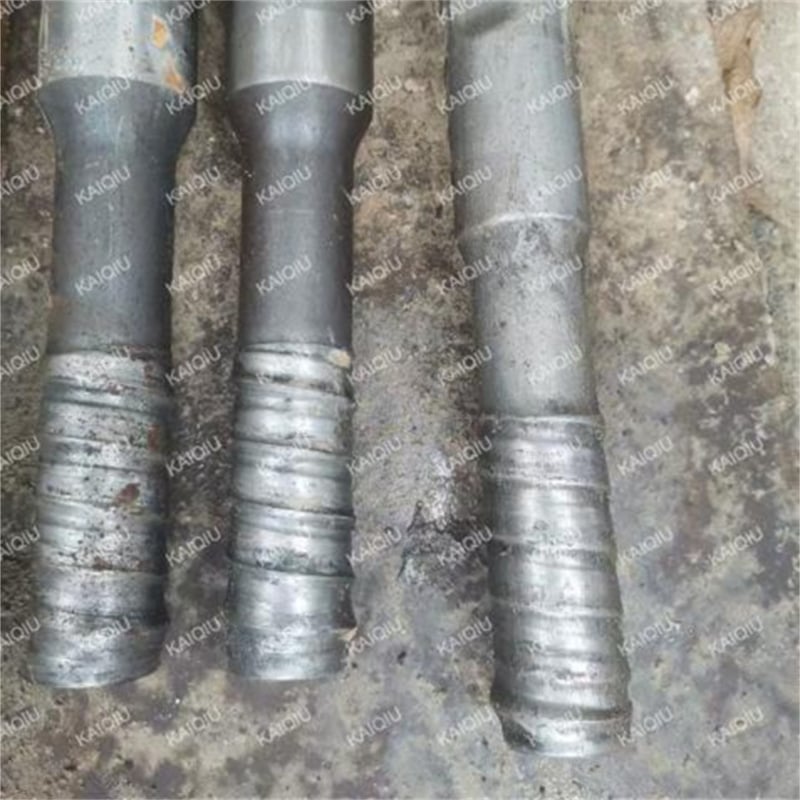
We asked a few mining customers to send us photos of their used shanks before they swap them out. Not the clean ones off the shelf — the ones that have been absorbing piston blows for thousands of meters underground. Here is what they sent.
KAIQIU shank adapters after mining service - set 1
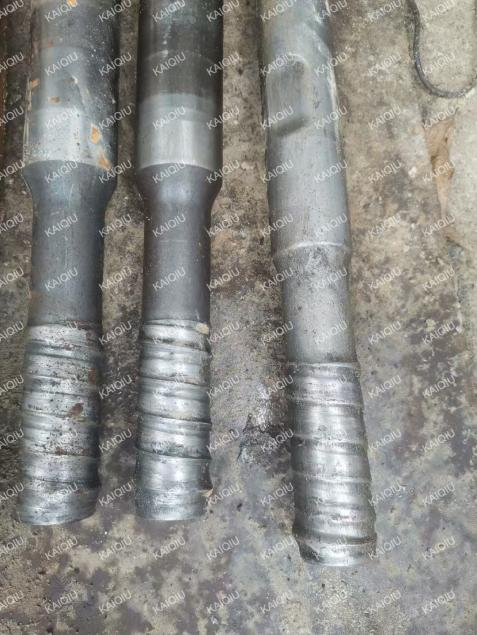
KAIQIU shank adapters after mining service - set 2
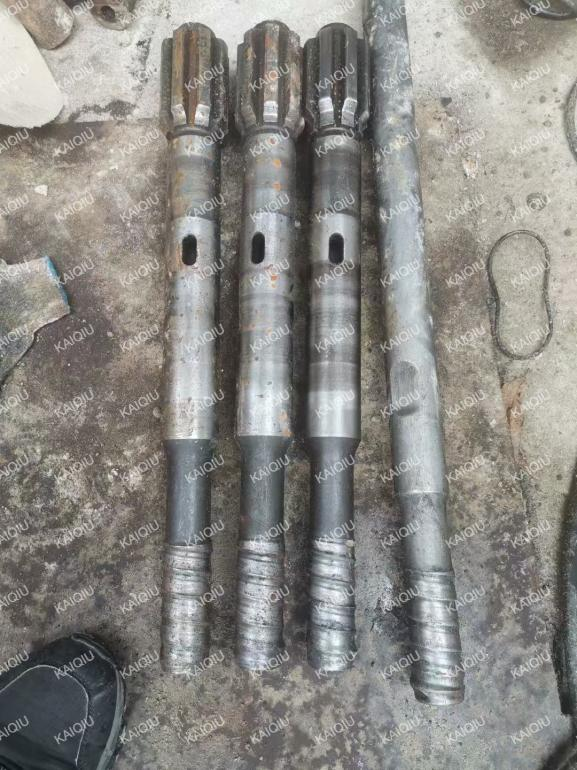
These are shank adapters from underground mining operations — the component that sits between the rock drill piston and the first rod. It takes every impact, every rotation, every shift. If a shank fails, the whole string stops. So when a batch of used shanks looks like this, it is worth paying attention.
What These Photos Tell You
Look across both photos and a few things stand out:
Splines are worn, not stripped. The drive splines on these shanks show even wear along the contact faces, but none are sheared off. In mining, stripped splines are one of the most common failure modes — usually caused by poor fit between the shank and the rotation chuck. These held their profile all the way through their service life.
Striking faces held their shape. The piston end of a shank takes thousands of blows per minute. When the face deforms or mushrooms, energy transfer drops and the shank is done. On these used shanks, the striking faces show impact wear but no mushrooming or edge chipping.
No cracks at the thread root. The thread end is where fatigue cracks like to start. Once a crack forms at the root of the thread, it propagates fast and the shank snaps. None of the shanks in these photos failed that way. They wore out, they did not break.
The bodies are sound. No fatigue fractures along the shank body. For components that live under constant cyclic loading, that comes down to clean steel and heat treatment done right.
Mining Conditions Are Hard on Shanks
Underground mining is tougher on shanks than most people realize. You are dealing with:
Mixed ground that puts uneven loads on the drill string
Operators running at high impact pressure to keep production rates up
Long drilling rounds where the shank does not get a break
Abrasive dust and water finding their way into the front head
A shank that survives in those conditions for a full service interval — without stripping, cracking, or mushrooming — is doing exactly what it is supposed to do. The shanks in these photos all reached or exceeded their expected life, with wear patterns that are predictable and gradual, not sudden.
What the Mine Said
"We used to keep extra shanks at every drill station just in case. With these, we plan our changes. The operators know roughly how many meters they'll get, so we swap on schedule instead of scrambling when one breaks."
Predictable wear is almost as valuable as long life. When you know a shank will give you 3,000 or 4,000 meters rather than maybe 1,500 or maybe 5,000, you can schedule maintenance instead of reacting to failures.
Shanks We Stock
HL500, HL700, HC95, HC109,HD712, COP2560, and other common drifters. T38, T45, T51 thread options. If you are running mining operations and want shanks that wear out instead of breaking, let us know what you are running.
Taizhou Kaiqiu Drilling Tools Co., Ltd.

 EN
EN